
AI and the Future of Human Judgment: Promise, Peril, Practical Wisdom

The danger is not that AI will think for us. It is that we will stop thinking critically ourselves.
Artificial intelligence is entering organizations faster than leaders can redesign the systems that shape its use.
It now analyzes patterns, drafts reports, models scenarios, screens candidates, and synthesizes information with astonishing speed. AI already performs much of the cognitive work that once signaled expertise.
This is not merely a technical shift. It is a change in where and how thinking occurs inside institutions.
The real danger is not that AI will think for us. The real danger is that we will lose the habit of thinking critically for ourselves.
Decades of research in psychology and behavioral science have revealed the limits of human judgment. Intuition feels reliable but often misleads us. We are overconfident and inconsistent. We mistake stories for evidence and confuse emotion with fact. Under pressure, we accept narrow options, avoid conflict, and cling to plans that feel comfortable.
Leaders might hope that AI compensates for these weaknesses. It does not. AI reduces certain forms of noise and bias, but it introduces new and serious risks. Automation bias causes people to trust algorithmic outputs simply because they appear precise. Cognitive off-loading reduces vigilance once the machine seems competent. Opaque models create accountability without understanding. Engagement-optimized systems reward stimulation over accuracy and crowd out truth.
AI removes inconsistency. It does not remove responsibility.
Leadership is changing in response. The work is no longer choosing among a few options in a conference room. The work is designing decision systems that remain wise while they become more intelligent.
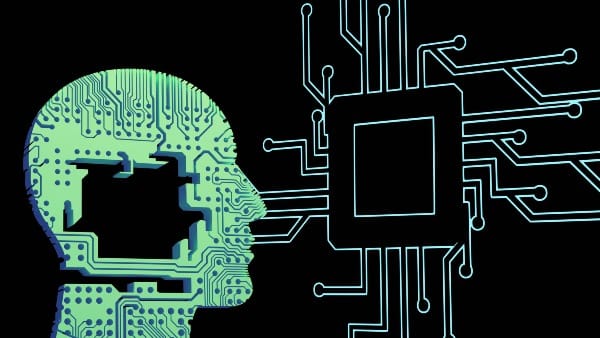
Leaders must understand how AI influences every stage of a high-quality decision process, from the way problems are framed to the way learning occurs after the decision is made.
The first requirement is to frame decisions correctly. Many of the worst organizational mistakes begin with a narrow or poorly defined question. AI tends to amplify whatever frame it is given. If the frame is too small, the output will be polished but wrong. Leaders must insist on broad, distinct, and realistic alternatives, not cosmetic variations. Good judgment begins with a richer menu of choices.
The second requirement is a wider ethical lens. AI systems act with speed, scale, and opacity, and they often optimize whatever criteria they are given while ignoring values that are not explicitly stated. This creates real risk. A system that improves productivity, efficiency, even creativity, can still harm people if it fails to account for their well-being; dignity, fairness, or long-term consequences. Stakeholders include employees, customers, communities, and anyone affected by downstream decisions the system influences. Leaders must make values visible, specify what must never be traded away, and insist that optimization serves human purposes rather than replacing them. In fast intelligent systems, ethical clarity is not optional. It is a safeguard against decisions that look impressive on paper but violate what matters most.
The third requirement is disciplined critical thinking. AI can summarize information, generate scenarios, and surface weak signals, but leaders must interrogate those outputs with healthy skepticism. Critical thinking is the antidote to false certainty. Leaders must ask what is missing, what assumptions the system relied on, what evidence would contradict the recommendation, and how the output would change if key variables shifted. Good judgment depends on the willingness to challenge elegant explanations, resist passively accepting machine-generated confidence, and examine the reasoning behind the result. AI can accelerate analysis, but leaders must slow down enough to question it.
The fourth requirement is structured reasoning. AI systems can overwhelm organizations with polished conclusions that lack visible logic. Leaders need decisions broken into discrete steps, each with interrogable data, clear assumptions, and traceable reasoning. Structured tools such as decision trees, weighted criteria, scenario maps, and sensitivity tests expose how the conclusion was reached and where uncertainty still lives. They make the thinking visible. This is essential for human oversight. A human in the loop must understand the logic of the decision, not outsource it. Without structure, leaders inherit conclusions they cannot question. With structure, they can verify, adjust, or reject the output with confidence.
Decision Making for Leaders: Using AI to Make Better Decisions
Augment judgment. Harness AI wisely. Lead with clarity in the age of intelligent tools.
"Wisdom is the disciplined coordination of knowledge, emotion, ethics, and foresight under uncertainty. AI will not provide this. Only leaders can."
The fifth requirement is psychological safety. AI systems often carry an aura of authority, which makes people hesitate to challenge their output. Leaders can make this worse when they are the executive sponsors of an AI initiative. Leaders must create a culture in which dissent is expected, weak signals travel upward, and assumptions are examined openly. Truth cannot surface in an environment that rewards performance over candor.
The sixth requirement is learning. AI can track assumptions, monitor forecasts, and flag early signs of trouble, but organizations must have the discipline to pause, examine results, and update their view. We need to avoid the trap of “resulting” and focus on the quality of our decision process, not the outcome, even as we integrate new information and update our models based on how things actually turn out.
Without these conditions, AI does not make organizations smarter.
It makes them faster at reinforcing their own blind spots and more efficient at institutionalizing error.
With these conditions, AI becomes a powerful instrument for expanding human judgment.
It can help leaders see farther, understand more, and make better use of scarce attention. It can free teams to focus on the parts of leadership that remain deeply human: integration, meaning, ethics, empathy, and long-term consequences.
Intelligence is becoming abundant. Wisdom is not. Wisdom is the disciplined coordination of knowledge, emotion, ethics, and foresight under uncertainty. AI will not provide this. Only leaders can.
The organizations that will thrive are the ones that treat judgment as a system rather than as a personality trait. They will use AI to strengthen human reflection rather than to replace it.
AI will transform leadership. Wisdom will determine whether it improves our decisions or erodes them. Intelligence will accelerate. Judgment must deepen.
Watch the Video:
In this conversation with the Iacocca Institute at Lehigh University, Joe discusses what this shift means for leadership judgment, responsibility, and decision quality.

Have feedback or other ideas? We’d love to hear from you.
Member discussion