
Base Rates and the Outside View: The Leader’s Guide to Smarter Decisions
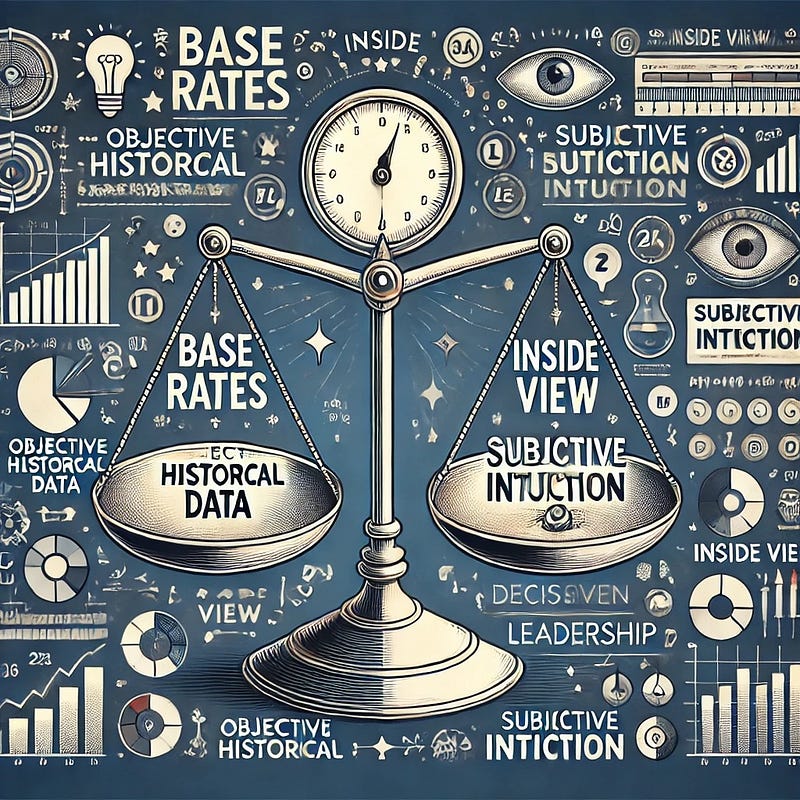
As leaders, we’re often celebrated for our intuition and ability to make bold, decisive calls. But too often, intuition leads us astray — particularly when we rely solely on our personal perspective or overly optimistic predictions. The antidote? Incorporating base rates and adopting the Outside View into your decision-making process.
Here’s how and why these concepts can transform the way you lead.
What Are Base Rates?
Base rates refer to the statistical frequency or likelihood of an event occurring within a specific population. They represent the broad, historical context of outcomes and provide a foundation for understanding what’s probable.
Example of a Base Rate in Action:
Imagine you’re considering investing in a startup. Statistics show that only 10% of startups in your industry survive beyond five years. That 10% is your base rate — a stark reminder of how risky your decision might be.
Yet, leaders often ignore base rates in favor of specifics or anecdotal evidence, falling into a classic cognitive trap known as base rate neglect. Why? Because the details of a particular situation (e.g., the charismatic startup founder or innovative product) seem more compelling than abstract statistics. Unfortunately, this can lead to flawed predictions and costly mistakes.
What Is the Outside View?
The Outside View is a decision-making approach that prioritizes general, objective data — such as base rates — over subjective impressions or unique case details (the Inside View). Developed by psychologists Daniel Kahneman and Amos Tversky, the Outside View encourages you to ground your decisions in the broader patterns of history rather than personal optimism or intuition.
Inside View vs. Outside View
- Inside View: “We’ll finish the project in six months because we’re motivated, and our team is highly skilled.”
- Outside View: “Historical data shows that 80% of similar projects take 9–12 months to complete. What makes us different enough to beat those odds?”
By adopting the Outside View, leaders can make more accurate predictions and avoid overconfidence.
Why Leaders Should Use Base Rates and the Outside View
1. Combat Overconfidence
Leaders often suffer from the planning fallacy, believing that their projects will run on time and on budget despite evidence to the contrary. Base rates serve as a reality check, forcing you to confront the odds and adjust expectations.
2. Improve Forecasting
When you rely on the Outside View, your predictions are more likely to align with real-world outcomes. This is particularly valuable for long-term decisions, such as entering new markets or launching products.
3. Reduce Emotional Bias
The Inside View is heavily influenced by emotions, anecdotes, and personal beliefs. Base rates strip away these biases, helping you focus on objective probabilities.
4. Support Data-Driven Leadership
Using base rates reinforces a culture of evidence-based decision-making, which is critical for building trust and credibility within your organization.
How to Use Base Rates and the Outside View as a Leader
Step 1: Identify a Reference Class
Find a group of past cases or projects similar to the one you’re evaluating.
- Example: If you’re planning a software launch, identify other companies that launched similar products in your industry.
Step 2: Examine the Base Rates
Analyze historical data to determine the typical outcomes within your reference class.
- Example: “What percentage of similar software products met their sales targets within the first year?”
Step 3: Combine Base Rates with Specific Evidence
Adjust the base rate using any unique details about your current situation, but proceed cautiously. Unique factors rarely outweigh the general trends.
- Example: “Our marketing team is stronger than average, so we might slightly exceed the base rate, but not by much.”
Step 4: Reassess Your Plans
Use the insights from base rates and the Outside View to recalibrate your expectations and plans.
- Example: If the base rate suggests a 20% success probability, consider strategies to mitigate risk or prepare for potential failure.
Practical Applications for Leaders
1. Hiring Decisions
Before hiring a candidate who dazzles in an interview, consider the base rate: “What percentage of candidates with similar traits succeed in this role?” Combine this with specific insights, like references or trial projects, to make a balanced decision.
2. Launching a New Initiative
Base rates can guide realistic projections for timelines, budgets, and success rates. Avoid falling into the trap of thinking, “This time will be different.”
3. Evaluating Risks
When weighing a risky business decision, use base rates to ground your analysis. For example, if only 15% of companies entering a particular market succeed, ask what differentiates your company — and whether it’s enough to shift the odds.
Overcoming Challenges
1. Finding Reliable Data
Not every decision has a readily available base rate. When data is scarce, seek insights from analogous industries or historical trends.
2. Resistance to the Outside View
Teams invested in the Inside View may resist base rates, perceiving them as overly pessimistic. Frame the Outside View as a complement, not a replacement, to their expertise.
3. Balancing Base Rates and Unique Factors
While base rates provide the foundation, they’re not the whole story. Be cautious but flexible in integrating situational specifics.
Final Thoughts: Base Rates and the Outside View as Leadership Superpowers
Leaders who embrace base rates and the Outside View don’t just make better decisions — they create a culture of rationality and evidence-based thinking. They recognize that while optimism is inspiring, realism wins the day.
So, before your next big decision, pause and ask:
- “What’s the historical success rate for similar decisions?”
- “What’s our specific evidence — and does it meaningfully change the base rate?”
- “Am I overly relying on the Inside View?”
Incorporating these principles into your leadership style won’t just improve your decisions — it will build your reputation as a leader who gets it right, time and time again.
Are you ready to apply the Outside View to your next decision? Share your thoughts and experiences in the comments — I’d love to hear how base rates have shaped your leadership journey!
Learn More
If you’re ready to enhance your decision-making skills and help your team make more objective, evidence-based decisions, consider joining us next week at The Decision Leadership Institute for one of our upcoming courses.
Newsletter
You can sign up for our Newsletter here. The newsletter is free and members get access to our Decision Advisor AI™, a valuable resource for leaders making decisions.
Coaching
Do you have a big decision to make and want some help thinking it through?
Sign up for a Decision Coaching session. We’ve added more slots.





Member discussion